

Cloud Migration/Transformation
Multi-Cloud Migration Analysis

Lift & Shift Plan

Zero Downtime Database Migration

Performance Testing & Cutover

Cloud Transformation: A Strategic Imperative for Modern Enterprises
In today's rapidly evolving digital landscape, cloud transformation is not just an option but a necessity for enterprises aiming to maintain competitiveness, enhance agility, and drive innovation. Transitioning workloads and databases to the cloud offers numerous benefits, including scalability, cost-efficiency, and access to advanced technologies. However, achieving a seamless migration with minimal risk requires a strategic approach, tailored to the unique needs of each organization.
Agile IT: Your Trusted Partner in Cloud Migration
With years of expertise, Agile IT has successfully guided numerous enterprises through the complexities of cloud migration. Our comprehensive experience spans leading public cloud platforms—Microsoft Azure, Amazon Web Services (AWS), and Google Cloud Platform (GCP)—as well as private cloud infrastructures. We understand that a one-size-fits-all approach doesn't work; instead, we develop customized strategies that align with your business objectives and technical requirements.
Hybrid Cloud Architectures: Balancing Flexibility and Security
Enterprises often opt for a hybrid cloud architecture, distributing workloads across public clouds (Azure, AWS, GCP) and private clouds. This approach offers several advantages:
- Data Security and Compliance: Sensitive data can be maintained on-premises or within a private cloud to meet stringent security and compliance standards, while less sensitive workloads leverage the scalability of public clouds.
- Cost Optimization: By strategically allocating resources, organizations can optimize costs, utilizing public clouds for variable workloads and private clouds for predictable, steady-state operations.
- Flexibility and Resilience: A hybrid model enables seamless integration of various services and applications, enhancing operational flexibility and resilience.
Tailored Migration Strategies: Lift-and-Shift and AI-Specific Workloads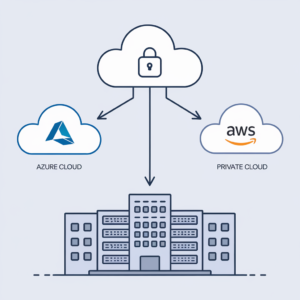
Agile IT employs diverse migration strategies to ensure a smooth transition:
- Lift-and-Shift: This approach involves moving applications and data to the cloud with minimal changes, accelerating migration timelines and reducing upfront costs. It's ideal for applications that don't require immediate modernization.
- AI-Specific Workloads: For workloads involving artificial intelligence and machine learning, we design cloud architectures that provide the necessary computational power and scalability, enabling advanced analytics and AI capabilities.
Containerization: Modernizing Enterprise Workloads
Virtualizing workloads through containerization offers significant benefits:
- Portability: Containers encapsulate applications and their dependencies, ensuring consistent performance across different environments.
- Scalability: They allow for rapid scaling of applications to meet varying demand levels.
- Resource Efficiency: Containers are lightweight, enabling better resource utilization compared to traditional virtual machines.
Seamless Database Migration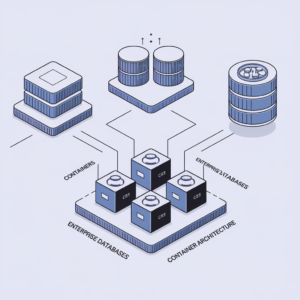
Agile IT specializes in migrating a wide range of databases to the cloud, including:
- Oracle Databases: We facilitate seamless migration to cloud platforms, ensuring data integrity and minimal downtime.
- Azure SQL Server: Our team ensures a smooth transition to Azure's managed database services, leveraging built-in security and compliance features.
- AWS RDBMS and Redshift: We assist in migrating relational databases and data warehouses to AWS, optimizing performance and cost-efficiency.
Our comprehensive migration services encompass assessment, planning, execution, and post-migration support, ensuring a seamless transition and enabling your organization to fully leverage cloud capabilities.
Understanding Relational and NoSQL Databases in Cloud Transformation
In the context of cloud transformation, it's essential to understand the types of databases that can be migrated:
- Relational Databases: These databases organize data into tables with predefined schemas, using Structured Query Language (SQL) for data management. They are ideal for applications requiring complex queries and transactions.
- NoSQL Databases: Designed for unstructured or semi-structured data, NoSQL databases offer flexible schemas and are optimized for horizontal scalability. They are suitable for applications with dynamic data models and large-scale data requirements.
Agile IT's expertise encompasses both relational and NoSQL databases, ensuring that your data architecture aligns with your application's needs and performance goals.
Embarking on a cloud transformation journey is a strategic decision that can propel your enterprise toward greater agility, innovation, and competitiveness. Agile IT stands ready to partner with you, offering tailored solutions and expert guidance to navigate the complexities of cloud migration, ensuring a successful and risk-minimized transition.
Performance----Test
Agile IT specializes in migrating a wide range of databases to the cloud, including:
- Oracle Databases: We facilitate seamless migration to cloud platforms, ensuring data integrity and minimal downtime.
- Azure SQL Server: Our team ensures a smooth transition to Azure's managed database services, leveraging built-in security and compliance features.
- AWS RDBMS and Redshift: We assist in migrating relational databases and data warehouses to AWS, optimizing performance and cost-efficiency.
Our comprehensive migration services encompass assessment, planning, execution, and post-migration support, ensuring a seamless transition and enabling your organization to fully leverage cloud capabilities.
Understanding Relational and NoSQL Databases in Cloud Transformation
In the context of cloud transformation, it's essential to understand the types of databases that can be migrated:
- Relational Databases: These databases organize data into tables with predefined schemas, using Structured Query Language (SQL) for data management. They are ideal for applications requiring complex queries and transactions.
- NoSQL Databases: Designed for unstructured or semi-structured data, NoSQL databases offer flexible schemas and are optimized for horizontal scalability. They are suitable for applications with dynamic data models and large-scale data requirements.
Agile IT's expertise encompasses both relational and NoSQL databases, ensuring that your data architecture aligns with your application's needs and performance goals.
Embarking on a cloud transformation journey is a strategic decision that can propel your enterprise toward greater agility, innovation, and competitiveness. Agile IT stands ready to partner with you, offering tailored solutions and expert guidance to navigate the complexities of cloud migration, ensuring a successful and risk-minimized transition.