

Data Engineering & Analytics with GenAI
At Agile IT, we recognize that enterprise data is the core driver of Agentic AI Transformation. However, in most organizations, data is scattered across multiple business lines, housed in isolated legacy systems, creating challenges in accessibility and usability. Our mission is to bridge these silos and provide a seamless, AI-driven analytics experience by integrating state-of-the-art data engineering workflows with Generative AI.
We are experts in the Azure and AWS Data Engineering ETL workflow tools, Datalakes and integration with Enterprise preferred Data Analytics platform.
AgileIT offers comprehensive services for data platform and analytics integration with Generative LLM model. We have deep expertise in industry standard platforms like MS PowerPI, Tableau, Databrick and Snowflake among others.
Data Engineering

Data Analytics Platforms Integration

GenAI Integration

Data Driven AI Applications

Our Data Engineering & Analytics Services for AI-Driven Transformation
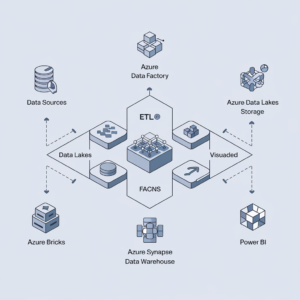
1. Data Extraction, Transformation, and Loading (ETL)
- Extraction: We begin by securely extracting data from various sources, including ERP systems, CRM databases, cloud storage, and legacy databases.
- Transformation: Extracted data is cleaned, structured, and standardized, ensuring that it’s accurate, relevant, and AI-ready.

- Loading: Transformed data is loaded into a unified, secure repository, often a data lake or datawarehouse, enabling easy and standardized access for analytics and AI applications.
2. Establishing a Secure, Common Data Access Layer
- A crucial step is creating a secure common data access layer that standardizes access protocols across the diverse databases within an enterprise.
- This layer acts as a bridge, ensuring that data remains accessible to authorized users and applications without compromising security.
- Agile IT’s expertise in security and governance ensures that data is protected through encryption, role-based access, and compliance with regulatory standards.
3. Integration of Analytics Platforms
- With data organized and accessible, we then integrate with leading analytics platforms like Microsoft PowerBI, Tableau, or DataBricks to deliver rich, customizable data visualizations and insights.
- These platforms, when paired with a consolidated data source, enable enterprises to identify trends, track KPIs, and make data-driven decisions.
Generative AI and Its Impact on Enterprise Data Analytics Platforms
The evolution of Generative AI (Gen AI) is reshaping the data analytics landscape, fundamentally altering how enterprises integrate, analyze, and act on their data. By eliminating traditional bottlenecks in data integration, script development, and scenario analysis, Gen AI accelerates insights and empowers businesses to adapt quickly to changing market dynamics. Below, we explore how Gen AI revolutionizes data platforms and enables powerful AI Agentic applications.
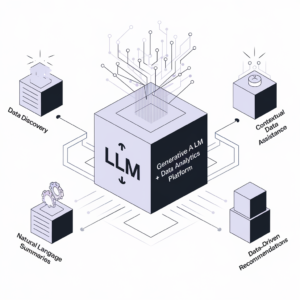
Integrating a Generative AI Language Model (LLM) in this data stack can significantly enhance analytics and productivity:
- Enhanced Insights and Analysis: LLMs can interpret large data volumes, generate natural language summaries, and provide data-driven recommendations. This allows users to query data in plain language and receive complex insights, reducing the need for specialized data skills.
- Automated Data Discovery: LLMs can identify hidden patterns and insights across disparate datasets, driving more accurate predictive analytics and supporting strategic decision-making.
- Contextual Data Assistance: Employees across functions can leverage LLM-powered chatbots or agents to retrieve insights, access reports, or explore data without needing to know technical querying.
How Agile IT Transforms Legacy Data and Analytics Systems
Agile IT's Data Analytics and AI services empower enterprises to transform data silos into an accessible, AI-enhanced ecosystem—fueling growth, driving innovation, and enabling a future-ready, data-driven culture.
Agile IT helps enterprises leverage the full potential of LLMs in their data landscape by:
- LLM Integration with Legacy Systems: We specialize in embedding LLMs within legacy data architectures, enabling AI applications to access, interpret, and process data from previously siloed systems.
- Streamlined Data Pipelines: We establish robust ETL workflows to keep data up-to-date and relevant, preparing it for LLM-driven analysis.
- Customizable AI Analytics: Our solutions enable LLMs to work in tandem with platforms like PowerBI and Tableau, providing augmented insights directly in the tools users rely on.
- Increased Productivity and Insight Accessibility: Through our secure, AI-integrated approach, employees can access critical insights faster, enhancing productivity and supporting timely decision-making.
Key Benefits of Gen AI in Data Analytics
Eliminating Complexity in Data Integration
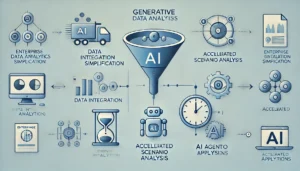
- Traditional data platforms like PowerBI, Tableau, and Alteryx require significant time and effort to integrate data sources, clean datasets, and build custom scripts.
- Gen AI Automates data preparation by interpreting unstructured and structured data, eliminating the need for custom scripts or manual transformations.
Accelerated Scenario Analysis
- Conventional methods of building and comparing scenarios often involve developing custom queries, scripts, or workflows.
- Gen AI Impact: Rapidly generates diverse scenarios with different variables using natural language prompts, reducing the time and expertise required.
Low-Friction AI Agent Creation
- Gen AI enables the creation of intelligent agents that can interact directly with existing platforms to deliver contextual insights and automate repetitive tasks.
- Example: A Gen AI-powered agent generates custom reports in Tableau or PowerBI based on a single prompt, reducing dependency on advanced SQL or DAX skills.
Improved Accessibility for Non-Technical Users
- Traditional analytics platforms often demand specialized skills in coding or analytics tools.
- Gen AI Impact: Provides intuitive interfaces where users can query data and build visualizations using plain language, democratizing analytics across the organization.
Real-Time Insights and Decision Making
- With built-in natural language understanding, Gen AI allows businesses to explore "what-if" scenarios in real time, empowering agile decision-making.
- Example: Analyzing how changes in pricing or inventory levels impact revenue projections without requiring pre-built models.
AI Agentic Applications on Data Analytics Platforms
Dynamic Report Generators
- Agents powered by Gen AI create comprehensive reports tailored to specific business needs, summarizing key insights without manual input.
- Example: A sales manager receives a report comparing quarterly performance across regions, automatically generated from Tableau or PowerBI.
Conversational Data Exploration
- AI agents interpret user queries and fetch relevant insights or visualizations.
- Example: A user types, "Show me last month’s revenue growth by region," and the agent instantly displays a chart in PowerBI.
Scenario Simulation Agents
- Generate and evaluate multiple "what-if" scenarios, such as changes in supply chain dynamics, pricing, or workforce planning.
- Example: An AI agent runs simulations in Alteryx to explore how changes in vendor lead times affect overall costs.
Automated Anomaly Detection
- AI agents monitor dashboards for outliers or anomalies and provide explanations or recommendations.
- Example: Detecting an unexpected spike in operating expenses and flagging the relevant data points in Tableau.
Proactive Alerts and Recommendations
- Intelligent agents notify users about critical trends or actionable insights, ensuring timely responses.
- Example: Notifying a marketing team about underperforming campaigns and suggesting budget reallocations.
Custom Workflow Automation
- AI automates repetitive tasks like data extraction, transformation, and visualization.
- Example: A Gen AI agent automates monthly data updates for a Tableau dashboard, saving hours of manual effort.
Benefits of Agentic AI Applications
Speed and Agility
- Reduce the time to insight, enabling businesses to react quickly to new challenges and opportunities.
Enhanced Productivity
- Minimize reliance on technical teams for custom development, empowering business users to explore data independently.
Cost Efficiency
- Reduce overheads associated with manual data preparation, script writing, and traditional scenario modeling.
Scalability
- Enable organizations to scale analytics capabilities without proportionally increasing technical resources.
User Empowerment
- Provide intuitive tools that encourage data-driven decision-making across all levels of the organization.
This combination of reduced friction, improved accessibility, and enhanced analytical capabilities makes Generative AI a transformative force in enterprise data analytics.